

Are you familiar with the phrase “nu wada ashok wada watwat?” It’s a saying widely known in the beautiful Igorot land, particularly in the town of Sadanga, Mountain Province.
This saying simply means “where there’s smoke, there’s a sumptuous feast of free meat (pork or beef) awaiting to be enjoyed.”
Yet, it’s important to note that such occasions are not everyday occurrences. Free meat “watwat” is given during various festive celebrations, especially in observance of their cherished traditions that continue to be upheld with great reverence until this modern age.
Some of these occasions are:
Engagement and Wedding
“Karang” (Engagement)
Karang represents the traditional engagement ceremony in Sadanga. During this intimate event, the woman and the man join together as a united family, thus signifying their commitment to one another.
When the word “karang” is heard on the way or in Maatong hotspring, an invitation is not needed, you may just drop by the house where the karang is held and enjoy free “watwat”. For some, this celebration is sufficient to establish them as husband and wife.
“Kashar” (Wedding)
However, numerous couples choose to elevate their matrimonial festivities by the celebration of “kashar” (wedding) – the formal marriage ceremony, which is taken to a higher level of splendor. This event usually takes a day and 2 nights.
“Chuno”
Some economically able individuals may also celebrate the “chuno” – a more costly and higher level of wedding ceremony celebrated by the “kadangyan” (rich) in the past.
However, this time, most of the young generation of Sadanga folks has the means to shoulder the cost hence, this sacred occasion became common.
“Chuno” is like a “kashar” however, there are other meticulous practices added and days of celebration are longer.
Kashar and chuno start with the resonating sounds of gongs while the great sugarcane wine (fvayash) and traditionally fermented grains of glutinous rice (tapey) are served.
Pigs, carabaos, and cows’ meat are cooked in an extra large cooking vat, which the locals called “shangdar”, further accentuating the grandeur and abundance of the occasion.
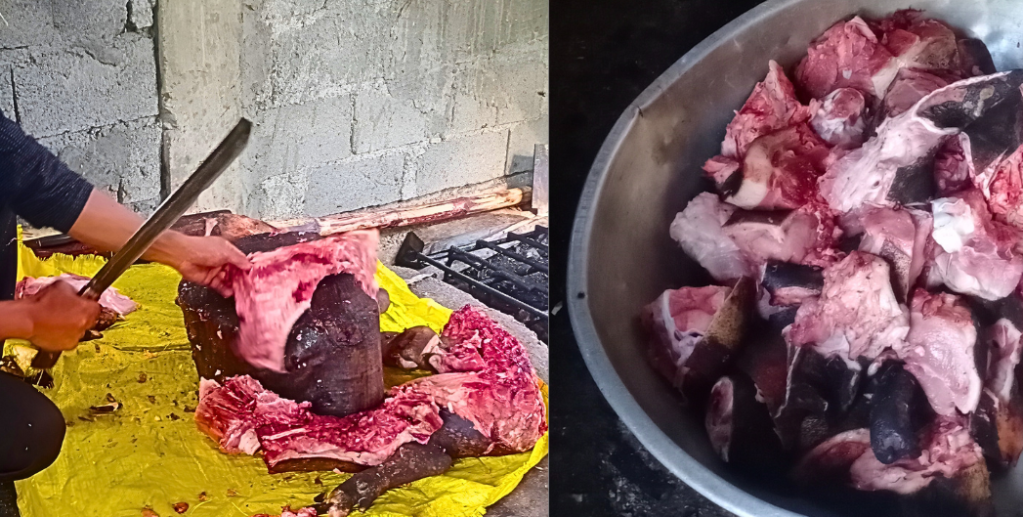
“Watwat” on this occasion are overflowing. A separate provision of freshly slaughtered carabaos or cows’ meat – they called it “tivek” – is distributed among the community in a designated location, such as the mountains or the riverbank where the slaughter occurs.
Families blessed with more boys or men may have a substantial portion of “tivek” while families with no male may not receive any share unless their male relatives bring some for them.
As for the remaining meat, it is transported to the wedding venue to be feasted again. Pigs are butchered each meal to augment the cows or carabaos’ meat.
Did you know…
Maniterter
Interestingly, Isadanga knows how to suppress selected individuals who are greedy of fresh meat. They call them a taboo word called “Maniterter”. This gives a negative connotation. Once you’re branded as such, you’d be the subject of unfriendly jokes and the topic of everyone.
“Maniterter” carries a derogatory undertone, signifying an excessive take out of fresh-cut meat. The mere mention of this word immediately creates a disapproving atmosphere. It makes the target the subject of unforgiving mocking and taunts, highlighting their insatiability of “watwat”.
So, when you’re new to the place, consider the word “control”. Even when you see an enormous chunk displayed in front of you, let the folks be the ones to give you the cut.

Try Our Premium Blog Writing and Content Article Editing Services!
 NorthlandFolks
Leave a comment