

Do you want to reach out to your website subscribers but need to know how? Here are the samples and elements you need for a great newsletter!
Writing newsletters makes you more visible to your readers and privately provides them with relevant information, updates, and unique content. However, sending out a generic email with dry, uninspired content will unlikely attract your readers’ curiosity or motivate them to engage.
To captivate and keep readers coming back for more, you must understand the newsletter’s key aspects, think outside the box, and unleash your creativity by experimenting with various newsletter styles. In this post, we’ll look at several distinctive and attractive newsletter samples to help you breathe fresh life into your email messages.
Part of a Newsletter
1. Subject Line

The subject line is the gateway to your newsletter. It’s the first thing your subscriber sees in their email, and it can make or break their decision to open it. As a writer, it’s crucial to craft a subject line that’s catchy, honest, and intriguing enough to pique the reader’s curiosity.
2. Preview Text
The preview text is the companion to your subject line. It’s the next thing your reader sees, just beside or below the subject line. Its role is to support the subject line and maintain the momentum it initiated. Use exciting words in the preview text to further entice your reader to open the email.
3. Body Copy
This is the central part of the newsletter, where you want to tell a story, inspire, or educate your audience. It must be short yet powerful enough to keep your audience engaged and yearning for more insights.
4. Call to Action
The call to action is the guidepost in your newsletter. It’s the part that persuades your readers to take action, whether to simply engage with your blog article, sign up for your services, or buy your product. It’s the door that connects your reader to the value you offer. Craft a call to action that’s short, clear, and compelling enough to instruct your readers on the next steps.
5. Signature
An email signature brings authenticity to the letter you wrote for your readers. It is usually located at the end of the newsletter and the design will always be up to your branding and style.
Here is an example from the Work for Impact website:

5 Newsletter Formats
1. Storytelling Newsletter
Powerful storytelling is one of the most effective ways to engage your audience. A storytelling newsletter uses compelling narratives to connect readers emotionally and showcase your brand’s human side.
This format might feature a personal anecdote from you as a business owner or a behind-the-scenes look at your team’s work. The key is to craft content that is highly relatable to your audience and leaves them feeling inspired, entertained, or enlightened.
Here is a snippet from Farizat, who offers Excel courses:

By weaving relatable, human-centric stories, your newsletter stands out from the typical dry promotional content integrated into many industry newsletters. This helps build a stronger emotional connection with the audience and position the company as a trusted, authentic brand.
2. Visual Digest Newsletter
In today’s fast-paced digital landscape, where attention spans are shorter than ever, a newsletter heavy on text can quickly lose readers’ interest. That’s where a visual digest newsletter shines.
This format prioritizes eye-catching visuals, such as infographics, illustrations, and high-quality photography, to convey information in a more engaging and digestible way. The text is concise, often in short captions or bullet points, allowing the visuals to take center stage.
One excellent example of a visual digest newsletter is the one from Istock, the popular photography website. Each edition features a carefully curated selection of the week’s exciting photos and videos, presented through a collection of striking images, charts, and minimal text.

This approach not only makes the content more visually appealing but also helps to quickly communicate the important key points to readers. Creating the appropriate blend of visuals and text can make a visual digest newsletter incredibly effective in capturing and retaining your audience’s attention.
3. Educational Newsletter
If your business or organization has a wealth of expertise and knowledge to share, an educational newsletter is an excellent choice. This can position your company as the leader in the industry.
This format provides your readers valuable, informative content that helps them learn new skills, gain deeper insights, or solve pressing problems. It might include in-depth tutorials, expert interviews, or comprehensive guides on issues your readership patronizes.
A great example of an educational newsletter is the following from Farizat-Excel Tips for All:
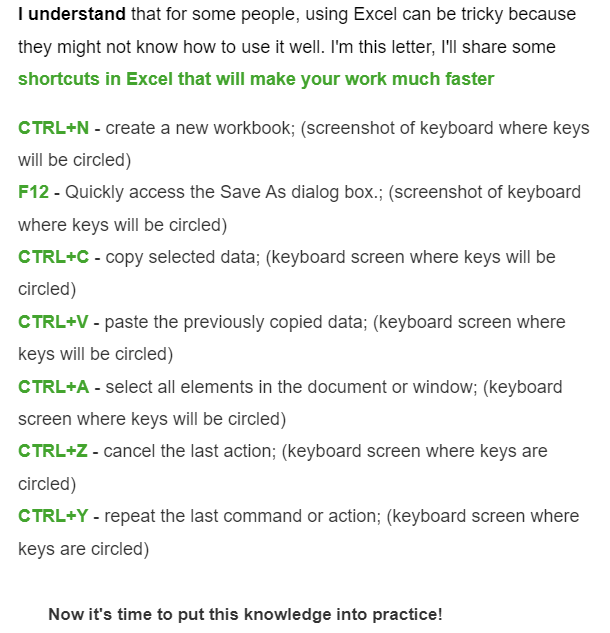
Consistently delivering high-quality, educational content increases engagement, brand loyalty, and business growth.
4. Curated Newsletter
In a world where we’re constantly bombarded with information from various sources, a curated newsletter can be a refreshing respite for your audience. This format involves carefully selecting and sharing the best, most relevant content around the web, saving your readers the time and effort of scouring the internet.
By presenting your readers with a concise, well-rounded digest of the most relevant information, you not only provide immense value but also respect their time by saving them the effort of scouring the internet. This approach can be effective when you want to position your business or company as a trusted source of industry news and insights.
5. Interactive Newsletter
In an age of increasing digital fatigue, newsletters that go beyond the traditional passive reading experience and incorporate interactive elements can be a powerful way to engage your audience.
An interactive newsletter might include features such as polls, quizzes, surveys, or even mini-games that encourage readers to actively participate and share their thoughts or preferences. This makes the content more engaging and provides valuable data and insights that help develop well-integrated business decisions.
This sample from the Lectera website uses a test to keep its readers at bay:

Conclusion
In the crowded world of email marketing, standing out and capturing your audience’s attention is more important than ever.
Remember, the key to creating a successful newsletter is to focus on providing genuine value and crafting an experience that resonates with your target audience. By delivering informative and entertaining content, you can turn your newsletter into a powerful tool for driving engagement, building brand loyalty, and, ultimately, achieving your business goals.
So, what are you waiting for? Explore these newsletter formats and discover the one that works best for your brand and audience. Happy newsletter writing!
If you’re not able to do it yourself, reach out to content writers of your choice or you may contact us to avail of our services.

Try Our Premium Blog Writing and Content Article Editing Services!
 NorthlandFolks
Leave a comment